
The Grumpy Old Fart Customer
Are You Freaking Kidding Me?
The Fine Art Of Selling Old Produce
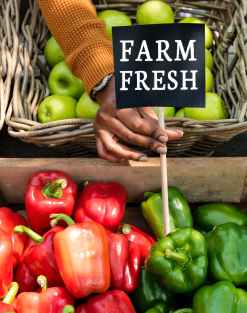
Photo by rawpixel.com on Pexels.com
I know you are familiar with the saying the “the shite rolls downhill” or possibly the American version of that expression. It is an old saying that generally is in reference to the worker/boss relationship, especially in Corporate America. It is true, as you have to ask yourself, have you ever seen it roll uphill? I think I have found another situation where that expression actually holds true as well.
I have, in the past, written about the quality of the produce that I get at my stores here in my little 16,000 people community (70 miles south of a major metropolitan area). It seems to me that it is always extremely difficult to get truly fresh produce, at least stuff that isn’t wrinkled or mushy. Most of the time the products are on the edge of being completely stale and without any kind of reasonable flavor. This situation reminds me of a mafia or corrupt government movie where produce gets left on the docks for days to rot because of union or mob disagreements. The only difference here is they pull it all into the stores just before the rot sets in and sells it to unsuspecting, hardworking customers.
However, I did some research on the subject and found some answers that might surprise you. As a sort of disclaimer, this may not pertain to all of you especially those of you in larger cities and markets as you probably get first-run, fresh produce. For those of us in smaller communities—we get hosed. There are some online reports out there which can be found on the magical device sitting on your desk, in your lap or on that thing that used to be used for phone calls (I know, I am dissing on cell phone users). These reports tell of supermarket and grocery store organizations who rotate old stock ahead of newer stock, usually placing the older stock on top or in the front of a shelf. This is the reason why I always pull the product from the bottom or from the back of shelve.
But there is a bigger issue here and it was written about in a few of the online articles that I read, it is the shuffling of older produce from large market stores to smaller markets. This is a practice that has evidently been going on for a while. I am trying to figure out in what parallel universe are smaller community citizens presumed to be stupid or less worthy? How is it that we rank lower on the food chain than those who live in bigger cities? The other alternative for older fruit and veggies (and other foods) is for it to be donated to the food banks, as if you are helping out the poor by giving them your table scraps and rotting fruit—let them eat stale food! I’ll bet this makes the corporate executives feel good about themselves during the morning visit to the mirror.
There is another possibility that I would like to explore here—transportation. Do smaller towns get moved down the chain of delivery schedules. I spoke with someone who is a semi-truck driver, he told me that he has witnessed situations where refrigerated trailers and non-refrigerated trailers loaded with food products are sometimes stuck in truck yards for days. And there are occasions where drivers have mixed loads (multiple destinations) where the smaller cities are the last drop point. What few people understand is that even food that is refrigerated or even frozen will age. The more time spent within the distribution phase, the less time you have to safely preserve it in your home to ensure freshness or for that matter—healthiness.
I decided to investigate this a little further and paid a visit to the regional supermarket in my city. I went through every section of produce and found that every fruit and vegetable was soft, limp, some things even wrinkly, some of it looked like the stuff our parents threw out when we were growing up. Who buys this shit? I inquired about this to the produce person who was nearby. I asked, “why does all of this produce seem old and beyond its prime”. His response was almost comical, he replied “it is this damn humidity, it is spoiling the stuff before it gets off the truck”. Ok, to be perfectly clear here and since we are speaking of trucks, I did not fall off of a damn turnip truck.
I have stopped by farmer-owned fruit and vegetable stands most of my adult life and many times it was in some of the worst humidity ever and all the produce there was fresh as a daisy. So, if you can’t come up with an honest and legitimate answer then just say that you don’t know. This is something that I believe underlies some deep dark truths about larger, corporate type grocery stores—anything for profits. In other words, they will find a place to sell this shite.
Another little-known fact is that larger chain-grocery stores have developed a way to store produce sometimes up to a year. And of course, this is made possible by the use of a chemical(s) that is sprayed directly on the produce (yikes, again with the chemicals). Then the produce is stored in large refrigerators until it is time to market. One must ask—what kind of chemicals are used in produce preservation? My guess is surplus formaldehyde that is not used by funeral homes. Seriously, if the chem can preserve the produce, it surely cannot be good to ingest. But don’t worry these suppliers have a recommendation, just rinse the produce before consuming. I’ll bet that works as well as rinsing the chickens bathed in chlorine.
I have a feeling that my town isn’t the only one that is experiencing this situation, probably many smaller communities who are just large enough to have a regional supermarket in it are getting treated to these mummified delights. When does this end? When will customers be told the truth and given a product that isn’t saturated with chemicals? I would say that I probably won’t live long enough to see it, however, maybe I will, as all these chemicals that I am eating will keep me alive for another 100 years—ouch!
Talk to Ya Later
The Grumpy Old Fart @2019 All Rights Reserved
 The Grumpy Old Fart Customer